


Welcome to Cycjet. Professional manufacturer of intelligent inkjet coding and laser marking machines
Welcome to Cycjet. Professional manufacturer of intelligent inkjet coding and laser marking machines
Does a laser coding and marking machine only make sense for large factories?
Not necessarily.
For manufacturers, the decision to upgrade to laser marking or inkjet coding is not determined simply by factory size. Material type, production speed, marking requirements, and long-term operating costs are often more important factors.
When the following signs start to appear on a production line, it may be time to reassess the existing coding method.
Industries such as food, pharmaceuticals, and medical devices are facing increasingly strict requirements for production dates, batch numbers, expiration dates, QR codes, and traceability information.
For example, food packaging needs clear and durable date coding, while the medical device industry is placing greater emphasis on product traceability and UDI identification.
This means manufacturers need more than simply printing information onto a product. The code must remain clear and readable throughout subsequent production, transportation, and use.
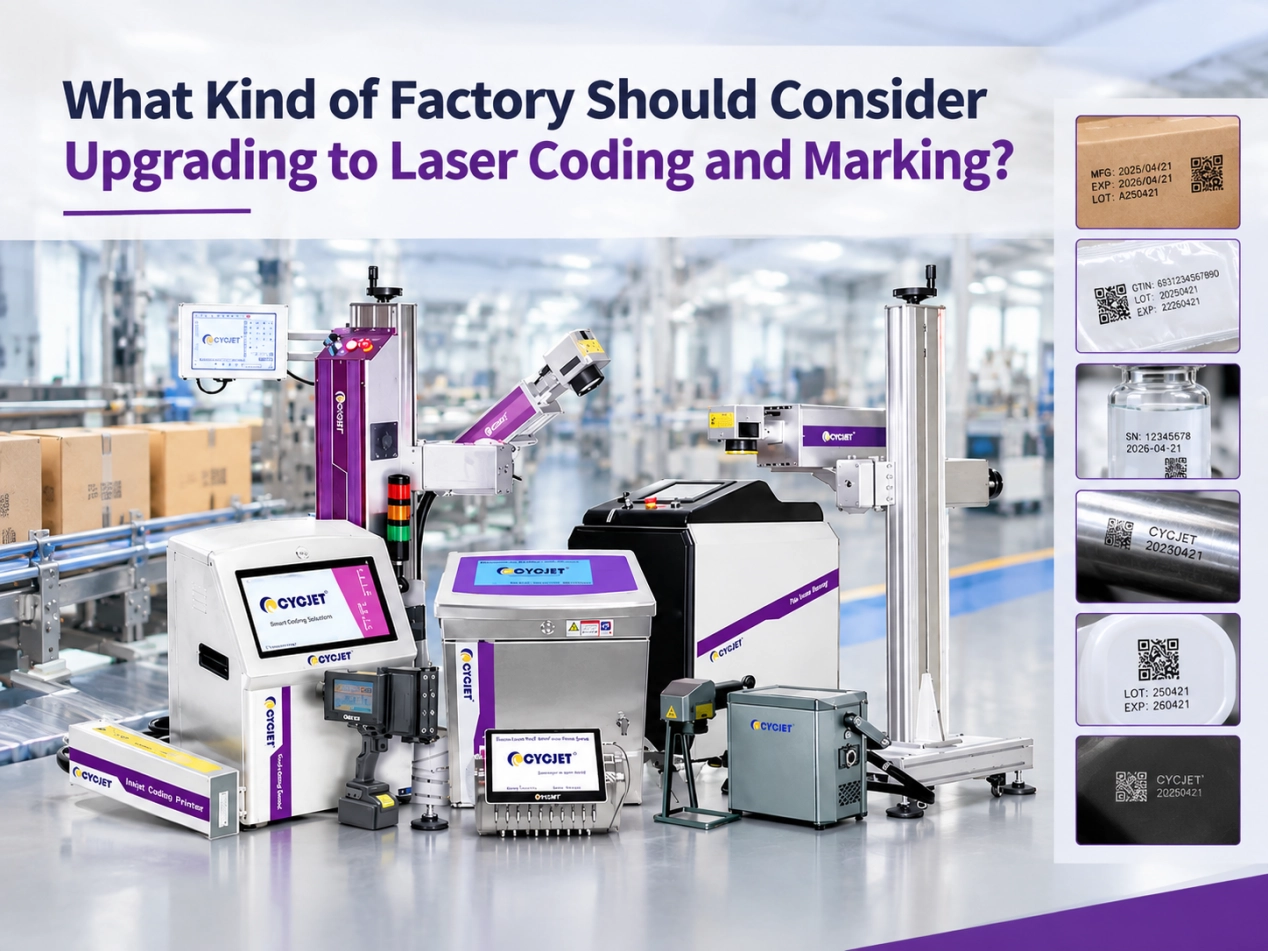
CYCJET offers different coding technologies, including CIJ inkjet printers, UV inkjet printers, and laser marking machines, allowing manufacturers to select a suitable solution based on their materials and application requirements.
Traditional production dates and batch numbers are increasingly being supplemented by GS1 DataMatrix codes, QR codes, serial numbers, variable data, and product-level traceability information.
As coding requirements become more complex, printers need to deliver not only clear and consistent marks, but also work with vision inspection, automatic rejection systems, and production management systems where required.
For different applications involving cartons, plastics, films, metals, and electronic components, CYCJET provides CO₂ laser, fiber laser, UV laser, and industrial inkjet solutions that can be selected according to material and production-line requirements.
The purchase price of a coding machine represents only part of its total cost.
For long-term production, manufacturers also need to consider ink, solvent, ribbons, printhead maintenance, downtime, and potential product waste.
Laser marking does not require conventional ink or ribbons. In certain continuous-production applications, this can reduce consumable management and related maintenance requirements.
However, laser marking does not automatically mean lower costs in every application. Manufacturers should evaluate total operating costs based on production volume, operating hours, materials, and marking requirements.
As lightweight packaging and new materials become more widely used, existing coding processes may encounter challenges related to adhesion, contrast, or durability.
In these situations, changing the coding technology may be more effective than simply adjusting equipment parameters.
For example, CYCJET UV laser systems can be used for certain films, plastics, and heat-sensitive materials. CO₂ lasers are commonly used for cartons, paper packaging, and certain plastics, while fiber lasers are generally suitable for metals and some industrial materials.
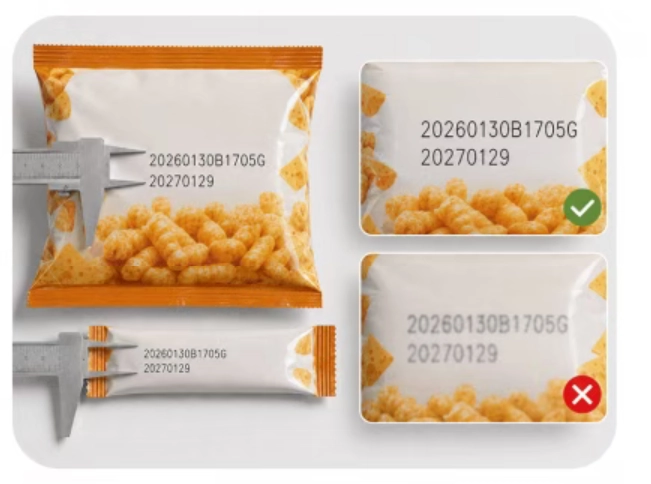
The key is therefore not to ask which coding technology is universally “better,” but which technology is better suited to a particular material and production process.
If production volume is relatively small, only simple static information needs to be printed, and there are no strict requirements for marking durability or automation, an existing coding solution may already be sufficient.
For example, CYCJET CIJ inkjet printers and handheld inkjet printers can meet the needs of many conventional applications, including printing production dates, batch numbers, QR codes, and basic text.
Equipment upgrades should be driven by actual production requirements rather than the goal of adopting laser technology simply for the sake of upgrading.
1. Test the application before selecting the equipment
Different materials respond differently to inkjet and laser technologies. Before making a purchase, manufacturers are advised to test their actual products and packaging materials to evaluate print clarity, adhesion, contrast, and durability.
2. Select the technology according to the material
No single coding technology is suitable for every material.
Cartons, paper packaging, plastics, films, metals, and other materials may require different solutions based on their characteristics, the information being printed, and production speed.
3. Evaluate long-term value
Equipment purchase price should not be the only consideration.
Consumables, maintenance, downtime, waste, production efficiency, and equipment service life should all be included when evaluating the overall cost of a coding solution.
As manufacturers upgrade product identification and traceability systems, equipment selection is increasingly moving beyond purchasing a single machine toward a more integrated approach based on materials, processes, and production-line requirements.
CYCJET provides a range of coding and marking technologies, including CIJ inkjet printers, UV inkjet printers, handheld inkjet printers, CO₂ lasers, fiber lasers, and UV lasers. These solutions can be used across food packaging, pharmaceuticals, electronics, automotive components, plastics, pipes, metals, and other industrial applications.
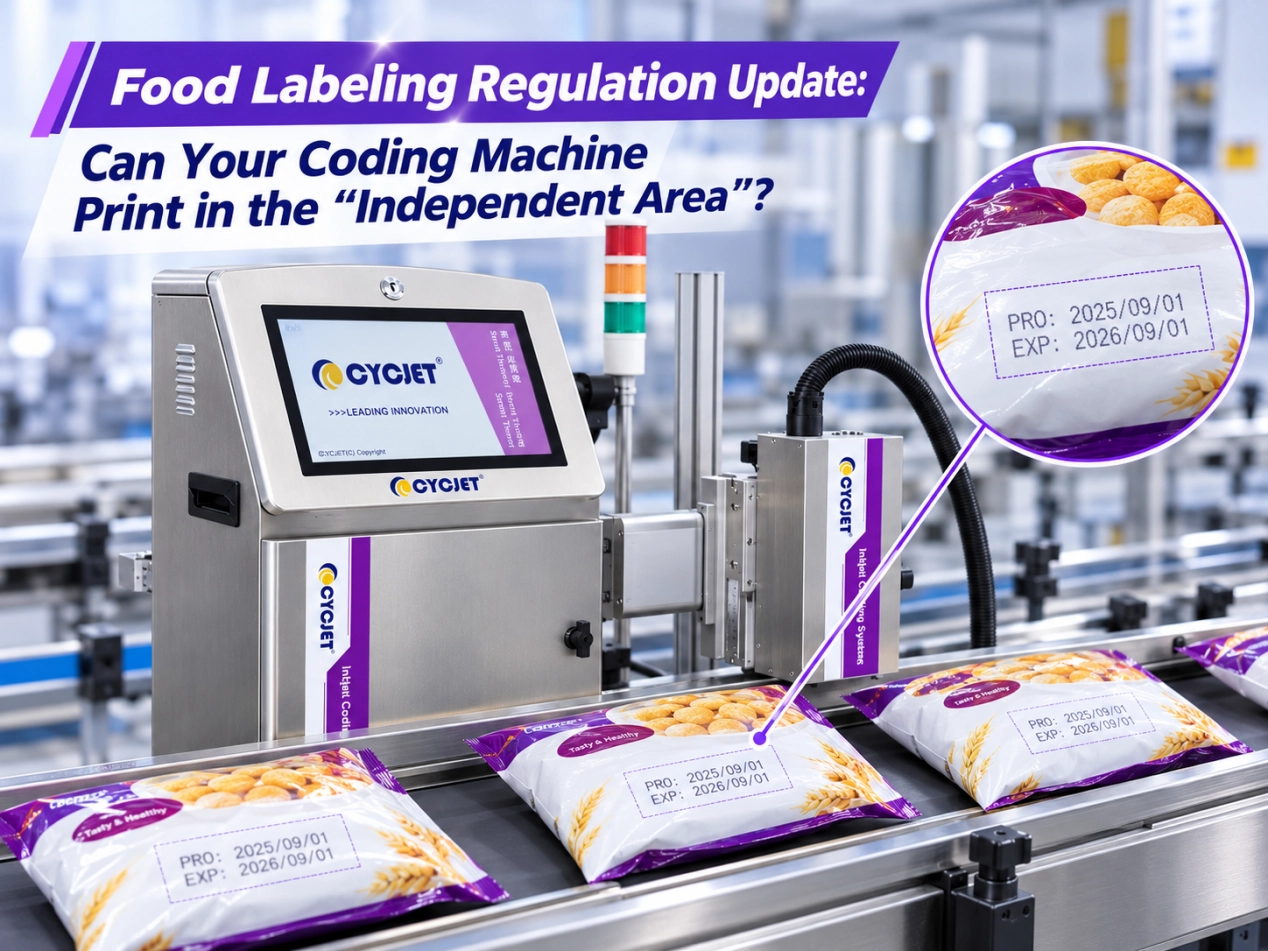
For manufacturers considering a transition from conventional inkjet coding to laser marking—or those unsure which technology is best suited to their products—conducting a sample test with the actual material is a practical first step.
CYCJET provides free sample testing to evaluate marking results on your products and packaging materials before determining the appropriate coding or laser marking solution.
Contact Person: David Guo
Telephone: +86-21-59970419 ext 8008
MOB:+86-139 1763 1707
Email: sales@cycjet.com
Web: https://cycjet.com/
Keywords:

WeChat QR code


